
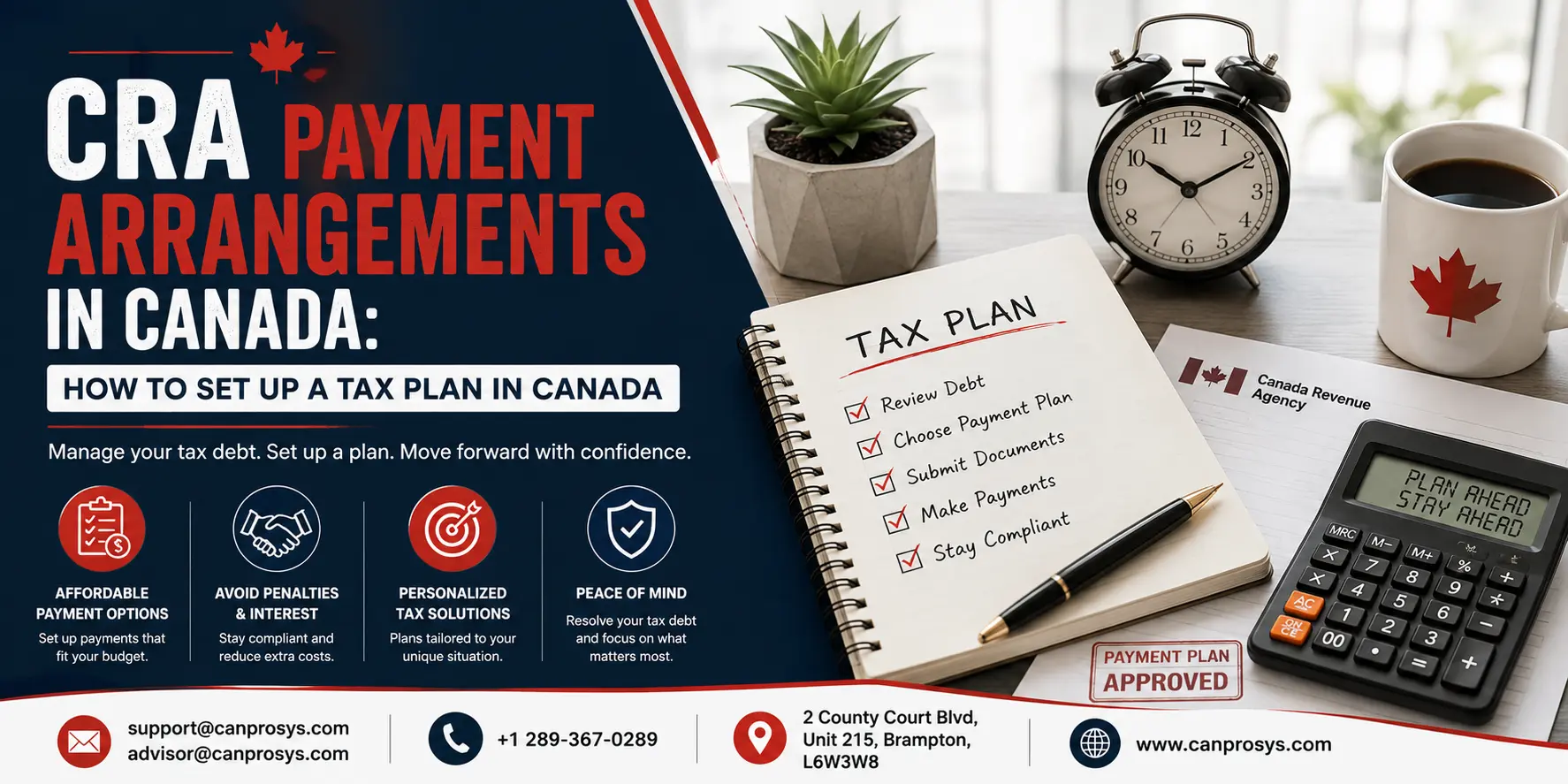
When you have a tax balance that you cannot pay in full by the deadline, you may be able to arrange payments with the Canada Revenue Agency (CRA). CRA payment arrangements enable individuals and businesses to clear a pending balance over a number of payments and not pay the balance once.
Key Takeaways
- CRA payment arrangements let eligible taxpayers repay outstanding tax balances through manageable scheduled payments.
- Reviewing income, expenses, assets, and liabilities helps determine an affordable payment amount.
- You can request an arrangement online through CRA services or contact the CRA directly.
- Interest generally continues to apply while an outstanding tax balance remains unpaid.
- Staying current with agreed payments and future tax obligations helps prevent collection complications.
This option can be useful when a large tax bill creates a temporary cash-flow problem. You may not repay the balance but you can repay to a well-organized timeline of what you can comfortably afford.
Making a payment plan to pay does not erase your tax debt. Interest may keep on compiling on unpaid amounts hence when the balance is addressed sooner than the cost of the repayment might be lower.
When Should You Consider a CRA Payment Arrangement?
The best thing to do is to take action as soon as you learn that you are unable to serve in full your balance. Waiting for collection activity can make an already difficult financial situation more stressful.
You might consider CRA payment arrangements if:
- You received a Notice of Assessment showing a balance you cannot pay immediately.
- Your available cash is insufficient to cover the full tax bill.
- Paying the entire balance would prevent you from covering essential household or business expenses.
- You have experienced a temporary reduction in income.
- You have a business tax balance that requires structured repayment.
The CRA advises taxpayers who cannot pay on time to contact the agency and discuss available options.
Step 1: Confirm How Much You Owe the CRA
Identify your balance prior to asking a payment arrangement.
Use your online account on CRA to view your accounts, notices, payments and outstanding payments. You have to know what you owe exactly and this may help you know whether you require a short term refinancing schedule or not.
If you are owing money to CRA, do not rely only on an older tax notice. Your available balance will have been altered due to interests, payments, adjustments or other activities on your accounts.
In the case of businesses, the sum can be associated with corporate income tax, GST/HST, payroll deductions or any other CRA account. The kind of debt may influence the way in which you arrange repayment.
Step 2: Review Your Financial Situation
The CRA might require details of your financial status when deciding what you can do to repay the balance.
Start by reviewing:
- Monthly household or business income
- Rent or mortgage payments
- Utilities and insurance
- Food and transportation expenses
- Loan and credit obligations
- Business operating expenses
- Available savings and assets
- Other outstanding liabilities
The goal is to find the payment amount that you can truly afford.
A common mistake is proposing a payment that looks manageable for one month but becomes difficult after several months. Long-term solution is more practical than a rather ambitious undertaking that you cannot sustain.
Step 3: Calculate an Affordable Payment Amount
After knowing your cash flow, figure out how much you can routinely put to your CRA cash balance.
To illustrate, when you have the money left after basic expenditure and are left with $1,000 available, then you should not necessarily invest the total in paying tax. There may be some unwanted surprises and you need to have enough financial fluidity to cover your other commitments.
Your proposed CRA payment plan should therefore consider your real monetary situation other than a figure that would sound reasonable.
The CRA has tools and worksheets designed to help taxpayers assess income and expenses when arranging repayment.
Step 4: Set Up the Arrangement Online or by Phone
The CRA offers choices on how to schedule the payment with its online services. Individuals can use My Account for eligible debts, while businesses can use My Business Account for certain business-related balances.
According to the CRA, eligible taxpayers can select “Proceed to pay” and then “Schedule a series of payments” to establish a pre-authorized debit arrangement.
Under some conditions and depending on the nature of the debt, you may also call on the CRA over the phone to negotiate debt repayment.
When speaking with the CRA, one should be ready to share the information that can help find your account and evaluate your situation, i.e., your Social Insurance Number/ business number and associated tax documents.
Step 5: Agree on the Payment Schedule
The payment plan ought to be practical and based on how much you are able to pay consistently.
A CRA tax payment plan is more than just resolving to pay as little as possible monthly. You must take into account the period of repayment and the interest that can influence the balance.
When a review of your financial situation is conducted by the CRA, it can call on supporting information, such as information about income, expenses, assets, or liabilities.
Do not forget to make copies of all the documents you present and read through payment terms thoroughly before commencing.
What Happens After You Set Up the Arrangement?
Once CRA payment arrangements are established, your responsibility does not end with the first payment.
You should:
- Make every scheduled payment by the agreed date.
- Maintain sufficient funds if payments are being withdrawn automatically.
- File future tax returns on time.
- Pay new tax obligations when they become due.
- Monitor your CRA account regularly.
- Contact the CRA promptly if your financial situation changes.
According to the CRA, the payment arrangements can be reconsidered at regular intervals, and taxpayers are supposed to keep abreast with their nature of tax payment.
What If You Cannot Afford the Agreed Payment?
Financial circumstances can change after an arrangement has been established. Your income may decrease, business revenue may fall, or an unexpected expense may affect your ability to continue making the agreed payments.
In case of default of a scheduled payment then contact the CRA as soon as you can, instead of just missing it.
CRA shows that the taxpayers who have to make any change to their arrangement are supposed to address the agency. Failing to modify the arrangement before paying less than agreed can result in collection action.
This is particularly important when owing money to CRA has already progressed into collections.
Does a CRA Payment Arrangement Stop Interest?
A payment arrangement does not generally mean that interest stops accumulating.
Interest will remain on any unpaid CRA balance, until it is paid off. This means extending repayment for a longer period can increase the total amount ultimately paid.
This is why it is necessary to seek a balance between the cost and the speed of repayments. A practical plan ought to be bearable and at the same time, trim the balance in the most efficient way your situation will permit.
What Happens If You Ignore Your CRA Tax Debt?
Ignoring a tax balance does not make it disappear.
The CRA can charge interest and applicable penalties on outstanding amounts. It may also apply certain tax refunds, credits, or government payments toward an outstanding debt. In more serious situations, collection measures may occur.
This is why establishing CRA payment arrangements can be an important step when you know that paying the entire amount immediately is not possible.
It is not merely to put off payment. It is to show that you are taking action on the balance and making progress toward resolution.
CRA Payment Arrangements vs. Paying the Full Balance
If you have enough funds available, paying the full balance may be preferable because it eliminates the outstanding debt sooner and can reduce future interest.
However, paying a large tax bill immediately may not be realistic for everyone.
A tax payment plan Canada help taxpayers manage a practical alternative when immediate full payment would create serious cash-flow difficulties.
The right approach depends on the size of the balance, available income, expenses, assets, future obligations, and the taxpayer's overall financial position.
Why Professional Guidance Can Make the Process Easier
Setting up a payment arrangement may appear straightforward, but tax debt can become complicated when the balance is large, collection activity has started, or your financial circumstances are difficult to explain.
Professional assistance can help you understand the amount owing, organize financial information, communicate effectively, and determine whether a payment arrangement is appropriate for your situation.
Why Choose Canprosys Consultants for CRA Tax Debt Support?
Canprosys Consultants assists Canadians to find their way out of tax debt and to interact better with the CRA. Their staff may assist in looking at your situation, comprehending the options of tax debt relief, and creating an effective strategy on how to resolve the outstanding balance.
If managing a CRA balance feels overwhelming, professional guidance can help you approach the situation with greater clarity and a structured repayment strategy.
Book your consultation now with one of our experts and start living a debt-free life.
Conclusion
Having a large CRA balance may be stressful, but not resolving the problem may cause financial implications in the long run. The CRA payment arrangements offer a methodical means that gives the qualified taxpayers a chance to recover the outstanding amount by not paying the full amount at once.
Begin by checking your balance, assessing your finances, determining a payment that is affordable to make, and call on the CRA immediately. After making an arrangement make payments regularly and keep up with future tax payments.
If your situation is complex or you are struggling to determine how to handle your tax debt, professional tax debt guidance can help you evaluate your options and move toward a more manageable solution.
Frequently Asked Questions (FAQs)
1. How do I set up a CRA payment arrangement?
2. Can I make monthly payments to the CRA instead of paying my tax debt in full?
3. Does a CRA payment plan stop interest on tax debt?
4. What happens if I miss a CRA payment arrangement payment?
5. What is the best tax payment plan Canada taxpayers can use for CRA debt?
Disclaimer:
The information published on this website, including its articles and blog posts, is intended solely for general informational purposes. It is based on the laws and regulations in effect at the time of publication, which may have changed thereafter. Nothing on this website should be considered or relied upon as legal advice. Tax laws and individual circumstances can be complex and vary from person to person, so the information provided may not be relevant to your particular situation. For advice tailored to your specific tax or legal concerns, we recommend seeking guidance from qualified lawyers and tax professionals.